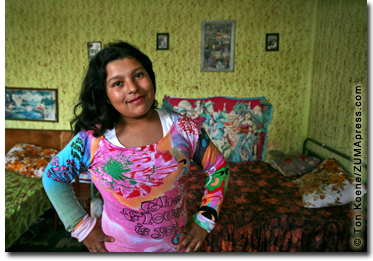
 Ellisaveta Spassova Boyanova, 12, is one of an



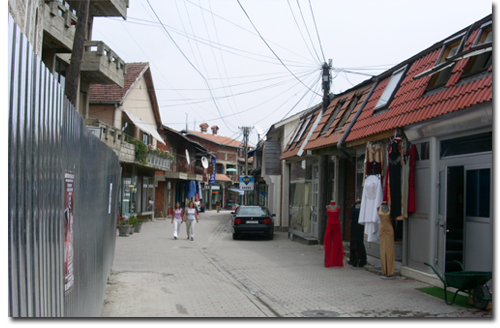
| A street in Peja, Kosovo. | |
“The police came without any warning at about 3:30 in the morning,” recounts Irfan, a Romani man who had fled to Germany from wartorn Kosovo.
“I was put in handcuffs and taken to a minivan and transported to Baden Baden airport. I came just as I was.”
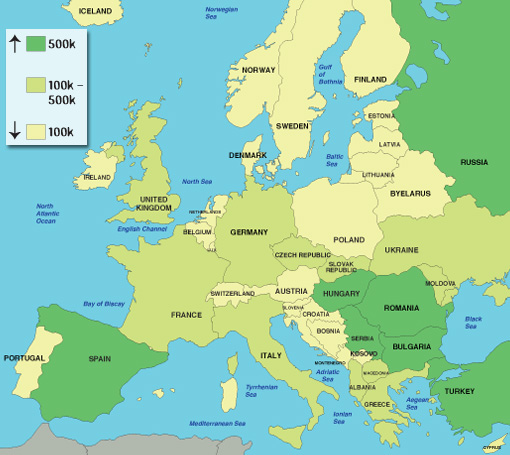
Irfan was deported back to Kosovo, where the Roma still face violence, following a brutal armed struggle. He was just one of the thousands of Roma living in other European countries after fleeing from Kosovo in the late 1990s. Many haven’t really found new homes. Instead of refugee status, many Kosovar Roma in Western Europe are given only temporary permits to stay. They can be sent back to Kosovo at any time. If they arrive in Kosovo, like Irfan, without their identity documents, they don’t have access to jobs or healthcare. They are, in effect, stateless—denied a right outlined in the Universal Declaration of Human Rights.
Caught in the Middle
In the late 1990s, the Yugoslav army and Serbian police and militias led a military campaign against the Kosovo Liberation Army, an Albanian guerrilla movement. The North Atlantic Treaty Organization (NATO) eventually bombed the region for many months.
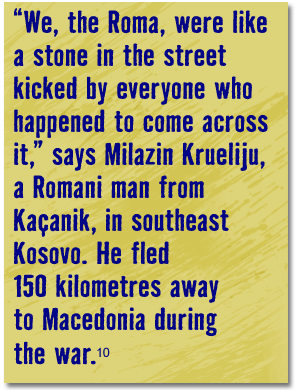
Kosovo’s Romani minority groups—mainly Roma, Ashkali, and Egyptians (not from Egypt but a local ethnicity)—were forced to take sides. The Roma were considered to be Serb supporters, but in reality, they were accepted by neither side and targeted by both.
There were cases of Serb police expelling Roma from their homes and of individual Serbs murdering Roma. Then, after the Yugoslav forces withdrew, many ethnic Albanians carried out violent attacks against the Roma as well.
Ardita , a young Romani woman from the Kosovar town of Obilić, fled to Serbia during the NATO bombing. “Everybody knew that the bombs were coming, but no one knew when they’d stop,” she says.
When her family returned to Obilić, groups of Albanian men started coming to their house at night. They demanded money and blamed the family for stealing from them, and for murdering Albanians. Ardita’s family fled for a second time, after someone threw a hand grenade into their home.